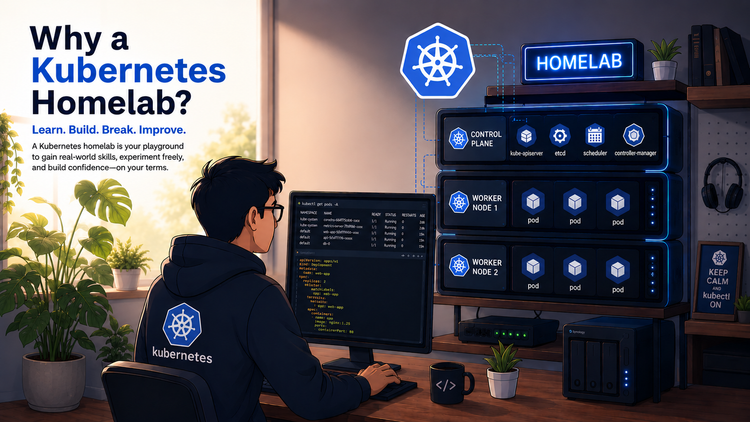
Why Kubernetes for a Home Lab?
Kubernetes is useful in a home lab when you have many containerized services and want repeatable deployments, ingress, storage, monitoring,
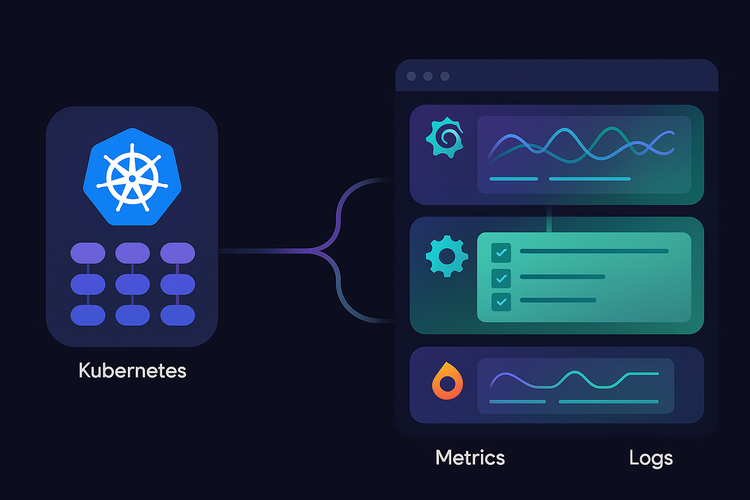
Enhancing Kubernetes Observability with Loki and Alloy
In our previous article, we set up Prometheus and Grafana using the kube-prometheus-stack Helm chart to monitor the health and
Monitoring Kubernetes with Prometheus and Grafana
In our previous article, we set up Longhorn to give our Kubernetes cluster reliable and persistent storage.
Installing Longhorn: Distributed
Installing Longhorn: Distributed Storage for Kubernetes
In our previous article, we installed and configured MetalLB and NGINX Ingress Controller to expose our Kubernetes services to the
Installing MetalLB and NGINX Ingress Controller in Kubernetes
In our previous articles, we walked through the installation and configuration of a Kubernetes cluster on a bare-metal server and
Introducing K9s: Terminal-based Kubernetes Dashboard
In our previous article, we walked through the installation and configuration of a Kubernetes cluster on a bare-metal server right
Installing Kubernetes: Building a Bare-Metal Cluster
In our previous articles, we explored setting up essential self-hosted media services like Jellyfin, TrueNAS, AdGuard Home, and others to
Installing Jellyfin: Your Open-Source Media Streaming Solution
In our previous article, we explored the installation and configuration of Sonarr, a powerful tool for TV show management.
Installing
Installing Sonarr: Your Ultimate TV Show Management Tool
In our previous article, we explored the installation and configuration of Radarr, an indispensable tool for movie enthusiasts.
Installing Radarr:
Installing Radarr: Your Personal Movie Collection Manager
In the previous article, we delved into the step-by-step process of installing Koel in our Home Lab.
Installing Koel: Your